
When asked if the Indian investigating agency would be allowed to visit Pakistan, Basit said that 'the whole investigation is not about reciprocity in view'.
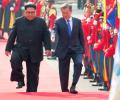
'Much depends on Moon's persuasive skill to make both Trump and Kim shed some of their rigidity and be flexible to accommodate contrarian viewpoints,' says Dr Rajaram Panda.

'China, which had earlier blockaded New Delhi's bid to join the Nuclear Suppliers Group by citing the nuclear non-proliferation law, finds itself in an awkward position and international isolation.' 'India needs to pursue a policy of mediation between China and the Southeast Asian countries for regional security,' says Srikanth Kondapalli.

The company moved the income-tax appellate tribunal and its appeal is pending there.

''There is the perennial worry in the Indian mind regarding the US 'hyphenating' India and Pakistan. Frankly, this is a completely nonsensical hypothesis. The US has always 'hyphenated' India and Pakistan and it couldn't have been otherwise,' says Ambassador M K Bhadrakumar.

The United States 'is leading the world in the use of compulsory licenses, and is hypocritical in voicing indignance when developing countries issue compulsory licenses for essential drugs,' Washington-based Knowledge Ecology International, with its offices in Geneva, has alleged.

'By not letting bankrupt banks fail, we have discouraged ordinary folk from taking precautions while choosing their bank or at least when they hear bad news about their bank,'says S Muralidharan, former MD, BNP Paribas.

Informing the world leaders of measures taken by him, Modi said India will continue to accord a high national priority to nuclear security through strong institutional framework, independent regulatory agency and trained and specialised manpower.
US wants to include climate change deal in it; India disinclined

'After more than 20 years of understanding, nothing much seems to have been achieved. What the two countries have been trying to do is to manage the recurrence of border incursions. The two sides must address the disease, and not the symptom of the disease,' says Rup Narayan Das.

Seeking a peaceful and secure neighbourhood amidst threat of terrorism and extremism, India and Kyrgyzstan on Sunday signed four agreements including one on bolstering defence cooperation and holding annual joint military exercises.

But he politely asked the Israeli head of the government to 'hold back' on settlements in territory claimed by the Palestinians for their future state: 'for a little bit'.

He was merely responding to the changing currents in the region, which, unfortunately, are not favourable to the Palestinians, says P R Kumaraswamy.

'Look East' policy was first coined by the Narasimha Rao government in the 1990s and has been followed by the successive governments.

The strategic pacts were inked after the summit between Prime Minister Narendra Modi and his Japanese counterpart Shinzo Abe during which they also discussed international and regional issues of mutual importance including UN security reforms.

The majority of the International Cricket Council's Board members on Saturday voted in favour of restructured revenue sharing model including rollback of the Big 3 formula despite vehement opposition from Board of Control for Cricket in India's representative Vikram Limaye.

Till March 2011, things were manageable.

Prime Minister Narendra Modi held a special interaction with Chinese media persons in New Delhi on the eve of the visit of Chinese President Xi Jinping where he summarized the possibilities of Sino-India bilateral ties.

Striking a conciliatory note amid rising tension in ties, Pakistan today said it does not want to live in "perpetual hostility" with India, noting time has come for the two neighbours to decide whether status quo should continue or a new beginning be made.

TDSAT had stated no amount was payable till resolution of the disputes.

Amid souring ties, the president visited Beijing for three days. On his return to India, a hope of better ties has arisen, says senior correspondent R Rajagopalan, who travelled with Pranab Mukherjee to the Asian superpower.

In a strong message to China, India and ASEAN on Thursday called for a "full and effective" implementation of the understanding between the parties involved in the South China Sea dispute, while stressing on maritime security and freedom of navigation in the critical sea lanes.

Even as Prime Minister Nawaz Sharif headed to the United States for the 70th session of the UNGA and for bilateral meetings to be held on the sidelines of the multilateral summit, back home all that is expected of him is to internationalise the Kashmir issue, or as Pakistan puts it, the 'Kashmir dispute'.

'By the time he came out after nearly five hours, he had a one-to-one conversation with the President, a delegation-level meeting, a reception, a dinner, a tour of the White House and a joint statement of a kind none of his predecessors ever had,' says Ambassador T P Sreenivasan.
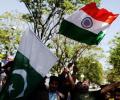
India suggested that Pakistan should refrain from using the Right of Reply and instead "use the right of introspection" to think about the direction in which the country is moving.
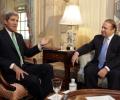
Pakistan Prime Minister Nawaz Sharif continues his exhortation for US mediation in Kashmir, and harks back to his meeting with former Prime Minister Atal Bihari Vajpayee when the latter had agreed to a resolution of Kashmir imbroglio; senior us officials assert there is 'absolutely no change in us policy' that Kashmir has to be resolved bilaterally. Aziz Haniffa reports.

Sitharaman, who is in Russia on a three-day visit, also met her Chinese counterpart Wei Fenghe on the sidelines of the international security conference.

The Dalai Lama's Arunachal visit is not likely to derail the relationship but it is enough to signal the Chinese that India is also willing to flash the Tibet/Taiwan card should the need arise, says Sana Hashmi.

He stressed the need for strengthening mutual trust and confidence while seeking solutions to outstanding issues.
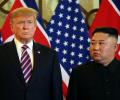
'Despite much hype of optimism, everyone went home empty-handed without a clear picture where they are heading in the future,' notes Dr Rajaram Panda.

Bangladesh handing over to India top ULFA leader Anup Chetia was a reflection of close bilateral ties particularly in security areas, the country's Home Minister Asaduzzaman Khan Kamal said in Dhaka on Thursday as he hoped New Delhi will return a wanted Bangladeshi national jailed in West Bengal.

His view will be shaped by his perception of US world interests and India's economic performance relative to China.

'We are completely engaged in fighting poverty; alas, our neighbour Pakistan seems only engaged in fighting us.'

'The Pakistani side was so cocksure of itself that it had come to the table with a pre-set agenda -- an agenda of unilateralism, knowing full well that nothing was going to come out of these talks,' says Rajeev Sharma.

The arbitration clause is present in almost 95 per cent of corporate agreements, according to tax and audit firm Ernst & Young.

Deborah Lee James will travel to India later this month as part of a maiden visit to four Asian countries that would also take her to Indonesia, Singapore and the Philippines and will discuss the situation in the South China sea as well as the growing threat of terrorism.

'Previous governments in India had reservations about working with Israel.' 'Modi has shed this tag.' 'Disengaging itself from its traditional and ideological foreign policy approach in the Middle East shall serve India's long-term interests.' Rajaram Panda explains why the significance of Modi's visit to the Jewish nation goes beyond markers like the first-ever visit to Israel by an Indian PM and 25 years of diplomatic ties.

External Affairs Minister Sushma Swaraj, who held extensive talks with Egyptian leadership on Monday, proposed to step up exchange of information and coordination to combat terrorism, both at the regional as well as global level
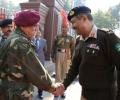
Fourteen years after they last met, the directors general of military operations of India and Pakistan on Tuesday held an over two-hour-long meeting at the Wagah border to ease tensions and ensure peace on the Line of Control.

Let it gradually pull itself out of international routes and focus on linking remote towns and cities.
